 LawnWire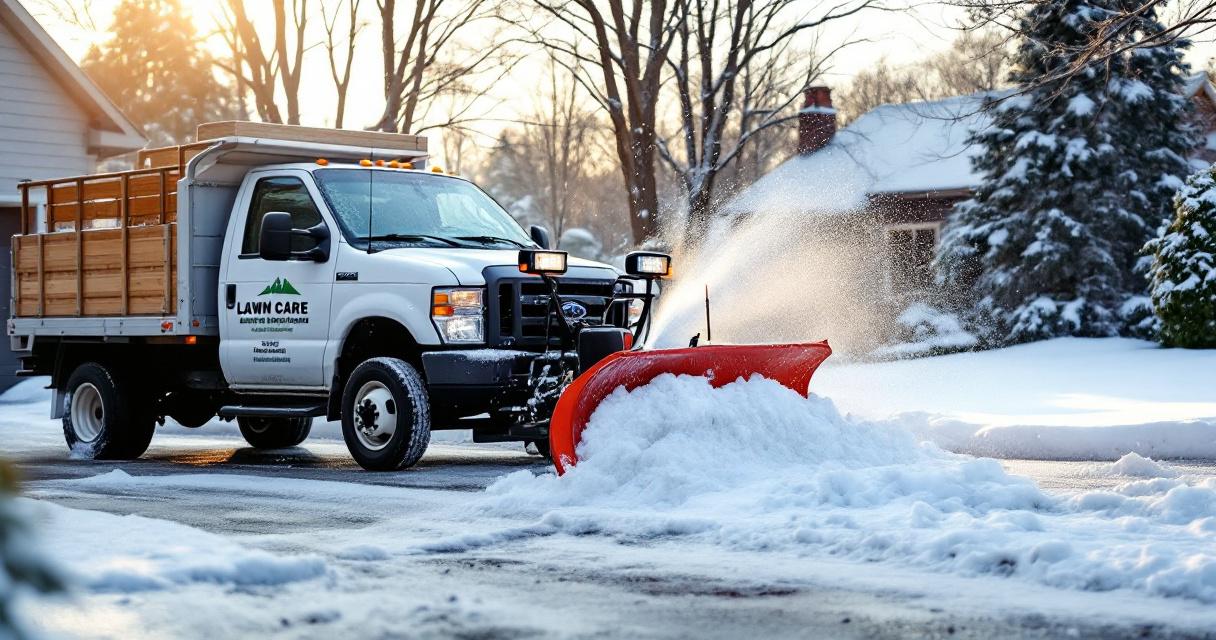
January 17. The grass hasn't grown since November. The bank balance has been dropping in a straight line for 10 weeks. Your truck payment hit yesterday, your commercial insurance renewal is next week, and your kid just asked about summer camp.
You open your accounting software and do the math. Last peak season you ran 60 properties a week at around $11,000 a month gross. Excellent year. And yet here you are, watching $2,100 a month walk out the door in fixed costs with nothing walking in.
This is the part of lawn care nobody talks about in the "start your own business" YouTube videos. Not the slow startup. Not the pricing fights. The five-month gap between your last November cleanup and your first April mow — where the business has to survive on nothing but what you saved (or what you planned).
Good news: this is the solvable problem in a lawn care business. Unlike customers who don't pay or equipment that breaks, winter is predictable. You know exactly when it's coming. You know exactly what it costs. You can plan for it — or not.
The Math Nobody Shows You
Let's put real numbers on the winter gap. Here's what monthly fixed costs look like for a typical solo-plus-helper operation running a used truck, two zero-turns, and modest insurance:
| Fixed cost | Monthly range | Notes |
|---|---|---|
| Truck payment | $500-$800 | Used 3/4-ton pickup on a 5-year note |
| Commercial insurance | $200-$500 | General liability + commercial auto |
| Equipment financing | $200-$600 | If you financed mowers; zero if paid cash |
| Phone, software, subscriptions | $100-$300 | Cell, accounting, lawn care software |
| Storage / yard rent | $0-$500 | Zero if you store at home |
| TOTAL MONTHLY FIXED | $1,500-$2,500 | Hits whether you mow or not |
Multiply by five winter months: $7,500 to $12,500 going out the door between November and April. That's the floor. That's before you pay yourself a dime. That's before groceries or a mortgage or summer camp.
Add employees — even one part-time helper you want to keep through winter — and the number climbs another $3,000-$6,000.
This is why winter planning isn't a "nice to have." It's the single biggest financial event of your year. More than pricing. More than customer acquisition. More than tool choice. If you don't plan for it, you're starting every spring from scratch, hoping your customers renew and your credit cards stretch one more time.
Three Ways to Close the Gap
There are exactly three ways to cover the winter gap. Every operator ends up using some mix of them:
- Earn through winter. Snow, holiday lighting, gutter cleaning, late-season leaf cleanup. Convert your equipment and skills into year-round revenue.
- Save during peak. A disciplined reserve fund built during the seven-month season. Boring, unglamorous, most effective.
- Smooth cash flow with contracts. Annual contracts with 12 equal monthly payments. Customers pay in January for July service. You get winter cash.
The operators who survive winter well usually combine all three. The ones who don't pick at least two. LawnWire handles all three in one place — seasonal vs annual vs winter-service customers all live in the same system, on the same dashboard.
Winter Services: What Actually Makes Money
Not all winter services are worth adding. Here's the honest ranking:
Holiday lighting (most overlooked)
The highest-margin winter service for lawn care operators, and surprisingly few do it. The work window is exactly when you need it: installation in November, removal in January. Filling the precise gap between your last fall cleanup and first spring mow.
Pricing: $300-$1,500+ per residential install. You provide and install the lights, maintain them through the season, remove in January. Buy lights wholesale, mark up 40-60%.
Investment: You already own ladders. Add commercial-grade lights, clips, and a weekend of design training. Total setup: $1,500-$3,000.
Risk: Low. Mostly labor-based, predictable demand, easy to upsell to existing customers.
Gutter cleaning (easy add)
Late fall / early winter is prime gutter season. Leaves are down, ice is coming. $100-$250 per home, an experienced crew clears 4-6 houses a day. You already own ladders and blowers. Marginal investment is gutter scoops and maybe a gutter vacuum.
Not a full-winter solution (the window closes once temps drop), but a solid 4-6 week revenue bridge in October-November.
Late-season leaf cleanup (underpriced)
Most operators stop leaf work too early. In most markets there's real demand well into December from customers who didn't hire anyone in November. They're willing to pay a premium to get it done before the holidays. Charge it. You're providing the service nobody else wants to.
Snow removal (know your region)
This is the obvious one — and also the one where you can get burned. Snow works great in reliably snowy regions with seasonal contracts. It's a nightmare in unpredictable-snow regions where one good winter is offset by two terrible ones.
Investment: Plow attachment ($3,000-$6,000), salt spreader ($500-$2,000), shovels. Call it $5,000 to start.
Pricing: $30-$75 per residential push, $100-$500+ commercial lots per push. Seasonal contracts (flat fee for the winter) pay best and protect against low-snow years.
Rule: If your region averages 6+ pushable events per winter, snow makes sense. Under that, you'll make more money with lighting and reserves.
Reserve Fund Math
The most reliable winter strategy is the boring one: save during peak, spend during winter. Here's how to size the reserve:
- Calculate your monthly fixed costs. Every dollar that hits whether you mow or not. (Use the table above as a starting point.)
- Multiply by off-season months. Typically 5 months in northern markets, 3 in southern, zero if you're in Florida or southern Texas.
- Add 25-50% cushion. For the equipment breakdown that always happens in March, the winter you need a dental crown, and the fact that April isn't immediately back to full volume.
- Divide by peak-season months. That's how much to save per month from each deposit.
Example: solo + 1 helper operation
- Monthly fixed costs: $2,000
- Off-season: 5 months = $10,000 floor
- + 40% cushion = $14,000 reserve target
- Peak season: 7 months of income
- Monthly save: $14,000 ÷ 7 = $2,000/month
At ~$11,000/month in peak season revenue, that's 18% of every deposit going to reserve. Automate it. Transfer happens the day deposits land.
If that percentage feels high: it is. And that's the cost of running a seasonal business that actually survives winter. If your peak-season pricing can't support an 18% reserve transfer and pay you a living, your prices are too low. This connects directly to pricing.
Annual Contracts: The Underused Move
Instead of billing customers only during the mowing season, offer an annual contract. Total seasonal cost, divided into 12 equal monthly payments. Customer pays the same $280 every month of the year. You collect $280 in January when you're not mowing a blade of grass.
Why it works
- Customers get predictability. Same bill every month, no surprise spring invoices, easier to budget.
- You get winter cash flow. Real revenue in your off-season months. On a 40-customer mixed base, annual contracts can put $3,000-$6,000 in your account every winter month.
- Customer retention skyrockets. Annual contract customers churn less because switching providers mid-year feels like more work than it's worth.
The math
Standard seasonal bill: $3,600/year (36 mows × $100). Billed April through October = $515/month for 7 months, $0 for 5 months.
Annual contract with 7% discount: $3,348 total ÷ 12 = $280/month year-round.
You give up $252/year per customer (the discount). In exchange: customer locked in, predictable monthly revenue, cash during winter. On 40 customers that's $10,080 in recurring winter cash — which is most of a solo operator's reserve target. LawnWire's annual contract billing was built for exactly this: one click converts a seasonal customer to 12 monthly auto-charges.
How to sell it
Don't force it on anyone. Offer both options at renewal. Frame the annual contract as "predictable monthly pricing" for the customer, not "I need winter cash" for you. Many residential customers on fixed incomes or who just prefer consistent bills opt in immediately. Commercial customers almost always prefer annual — their AP departments are built around predictable invoices.
What to Actually Do in the Off-Season
Even if reserves and contracts cover the bills, the off-season shouldn't be wasted. The work you do in December-February directly determines how profitable next season is.
Equipment maintenance
- Full-service maintenance on every machine while you're not running them
- Rebuild or replace worn components now, not in May when you need them tomorrow
- Organize your trailer and shop — minutes saved per job add up to hours per week
Marketing and ops prep
- Update your website, Google Business Profile, photos
- Design and order spring door hangers and postcards
- Draft renewal letters and email sequences for February mass-send
- Audit your customer list: who are you firing next year? Who do you want more of?
Financial and business planning
- Review last year's P&L in detail — which services were actually profitable?
- Set next year's revenue and growth targets. See our growth playbook.
- Decide on pricing adjustments. Everything went up — so should your rates. See how to raise prices without losing customers.
- Reconcile your accounting, file taxes early, make sure your books are clean.
Training and certifications
- Get pesticide/herbicide certified if you're not — opens new revenue streams
- Take an irrigation troubleshooting or hardscape basics course
- Learn basic equipment repair to cut future shop bills
The operators who use winter as planning time consistently outperform the ones who hibernate. Starting April with a plan beats starting April with a scramble.
Keeping Your Crew Over Winter
If you have employees, winter creates a retention problem. They need income. If you can't provide it, they'll find it elsewhere. Losing a trained, reliable helper over winter means hiring and training a replacement in spring — exactly when you can least afford the time.
Reduced hours over full layoff
If you have winter services, keeping a helper on reduced hours beats a full layoff. 15-20 hours a week of snow, lighting, or gutter work keeps them engaged and available for the April ramp.
Cross-train in fall
A helper who only knows how to mow is useless in winter. Cross-train them on lighting install, snow operation, or gutter work in September-October. Makes them year-round useful.
Be honest at hire
The best time to manage winter expectations is day one. Be upfront: "This is seasonal. Winter looks like X. Here's what we've done to bridge it. Here's what to expect in November." Workers who know the deal from day one don't leave over it. Workers blindsided in November absolutely do.
Return bonus
Simple retention tool: come back to work the first day of the new season, get a $200-$500 lump sum. Small cost. Dramatically increases the chance your best helper shows up April 1 ready to go. The alternative — a new hire in March — costs 10x in time, training, and quality.
Frequently Asked Questions
How much money does a lawn care business need to survive the off-season?
A typical solo-plus-helper operation has $1,500-$2,500 in monthly fixed costs (truck, insurance, equipment, software, storage) that don't pause in winter. Over five winter months that's $7,500-$12,500 in outflow with nothing coming in from mowing. Your reserve fund or winter-services revenue needs to cover that floor before you pay yourself anything. If you have employees, double it.
How much of each mowing invoice should a lawn care business save for winter?
If you rely entirely on reserves (no snow, no lighting), transfer 18-22% of every peak-season deposit into a separate savings account. On a typical $11,000/month in peak season revenue, that's about $2,000/month set aside. Seven months × $2,000 = $14,000 — enough to carry a typical 5-month winter with margin. If you have winter services reducing the gap, you can lower that percentage.
Should a lawn care business offer annual contracts with monthly payments?
Yes — for customers willing. Annual contracts with 12 equal monthly payments smooth your cash flow out of peak season. A 5-8% discount usually gets enough customers to opt in. On a $3,600/year lawn, that's $280/month year-round instead of $515/month × 7 months + $0 × 5 months. You get winter cash, they get a predictable bill, both win.
Is snow removal worth adding to a lawn care business?
It depends on your market and winters. In reliably snowy regions (Midwest, Northeast) with seasonal contracts, snow is a genuine winter business. In unpredictable-snow regions, it's feast-or-famine — one big storm is great, a mild winter is a $5k plow attachment sitting in the yard. Run the numbers for your region: average snow events × typical per-push revenue × customer count. If the math barely pencils, skip it and focus on holiday lighting or reserves instead.