 LawnWire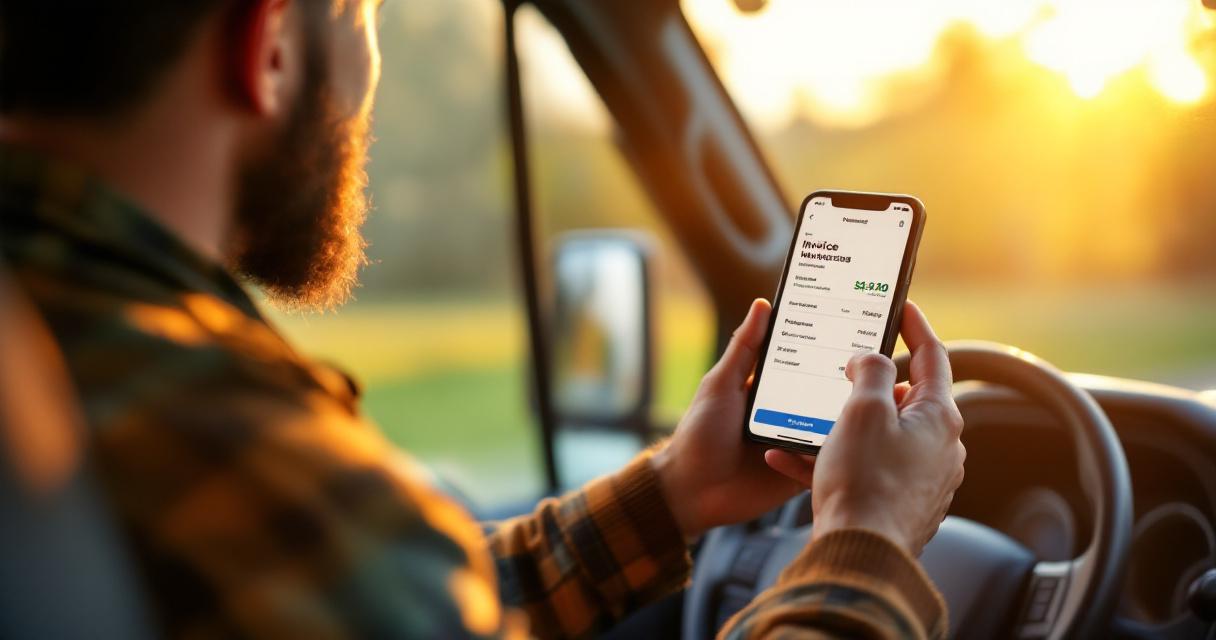
It's Sunday night. You scroll Venmo, then Zelle, then your bank deposits, then a notebook, then your phone's camera roll for receipt photos. You're trying to answer one question: who actually owes me money right now?
You can't quite tell. There are six payments that came in without invoice numbers attached, three customers you think paid but the deposit doesn't match what you billed, and at least two who haven't paid in 30 days that you keep meaning to text. Total time spent figuring this out tonight: 90 minutes. Next Sunday: probably the same.
The real problem isn't that getting paid is hard. It's that you're solving two different problems at once and not realizing it.
The Two Invoicing Problems Most Operators Conflate
If you separate them, the fix becomes obvious:
- Sending invoices well. Right format, right time, right payment options, right delivery channel. Solvable with software that does it the same way every time.
- Chasing the ones that drift. Net 7 came and went; now it's Day 14. Manual labor, real awkwardness, but only applies to maybe 20% of invoices in a healthy lawn business.
Most operators try to fix problem #2 by getting better at problem #1 ("if I just invoice faster, they'll pay faster"). It works partially. But the chase is its own job. A small business owner on r/Entrepreneur framed it cleanly:
"Cash flow problems are usually automation problems."
Right. The first 80% is software. The remaining 20% is judgment. This guide covers both, with deeper dives linked at the bottom of each section.
What Every Lawn Care Invoice Should Include
Bare minimum, every invoice needs:
- Your business name and contact info — phone + email at minimum
- Invoice number — sequential, not random. Helps you and your accountant track them.
- Date of service (not just date of invoice)
- Customer name and property address
- Itemized services — what you actually did
- Amount due — clear, no math required
- Payment terms — "Due in 7 days" or "Due on receipt"
- Payment link or button — one tap to pay
- Payment methods accepted — cards, ACH, etc.
- Late fee policy — if applicable, must be stated upfront
The line-item detail matters. "Lawn service: $55" reads as vague. "Mow + edge + trim, 1234 Oak St, May 5: $55" tells the customer exactly what they're paying for. That clarity reduces disputes and signals professionalism — both make customers pay faster.
Payment Terms That Actually Work
Your terms should keep cash flowing without feeling aggressive. The lawn care defaults that work:
| Terms | Best for | Reality check |
|---|---|---|
| Due on receipt | One-time jobs, brand-new customers | Reads as pushy on recurring residential. Don't default to it. |
| Net 7 | Regular residential customers | The right default. Short enough to feel current, long enough to feel reasonable. |
| Net 15 | Commercial accounts, HOAs | Larger orgs need internal processing time. Don't fight it. |
| Net 30 | Large commercial contracts only | Painfully slow. Only justified by contract size. |
| Prepay (monthly/seasonal) | Annual contract customers | Best for cash flow. See winter revenue gaps for the full annual contract play. |
Whatever you choose, write it on every invoice AND in your service agreement. A customer who agreed to Net 7 at signup can't claim they didn't know.
Payment Methods: What to Accept (and What to Push)
The easier you make it to pay, the faster people pay. But not all payment methods are equal — some are great for you, some only feel great to the customer.
- Cards (push hard). 2.9% + $0.30 in fees through Stripe is the standard rate. Cost yes, but you eat that fee for speed, automatic reconciliation, and saved-card auto-pay. Card payments through your invoicing tool reconcile straight into your accounting.
- ACH / bank transfer (push for big invoices). ~0.8% via Stripe. Lower fees than card, ideal for monthly contracts and commercial. Slower clearing (3-5 days) is fine for recurring billing.
- Venmo / Zelle / Cash App (accept, don't promote). Many residential customers prefer these. Easy and fee-free for you on Zelle, but they don't auto-reconcile to your accounting tool, which means manual matching. Tolerable at low volume; painful at scale.
- Checks (accept reluctantly). Older customers love them. They're slow, require deposits, and can bounce. Don't refuse, but don't make checks the default option.
- Cash (last resort). Fine for the occasional small job. Hard to track, easy to lose, and a tax-time headache. Always issue a receipt.
The play: set up cards + ACH through your invoicing tool as the defaults, and let Venmo/Zelle/checks/cash exist as alternatives for customers who insist. Avoid being cash-only — it limits which customers will work with you and creates real bookkeeping problems.
When to Send Invoices
The honest answer: same-day, every time.
The math is simple. If you mow Monday and invoice Friday, you've already given your customer 4 days of float on someone else's money. Multiply by every visit, every week. Same-day invoicing gets paid 2-3x faster than weekly batches because the work is fresh in the customer's mind — and most homeowners pay impulse-fast in the first 24 hours.
By service model
- Per-visit billing: Invoice the day of service. Best for residential mowing where each visit stands alone.
- Weekly batch: Only if you serve a customer multiple times per week and they've explicitly asked for one weekly invoice. Send Friday morning, due the following Friday.
- Monthly billing (prepay): Contract customers paying a fixed monthly rate. Send on the 1st for that month's services. Best cash flow position.
- Monthly billing (postpay): Send on the last day for that month's services. Worse cash flow than prepay, but standard for some commercial accounts.
The cardinal rule: never let invoices stack up to do at one sitting. If you're invoicing all of last week on Sunday night, you're already 4-7 days behind on getting paid. This is the strongest argument for automating your billing.
The 80% You Can Automate
Here's what software handles without you remembering anything:
- Invoice generation. Mark a job complete; an invoice fires automatically. Same day, every time.
- Payment links on every invoice. Customer taps "Pay Now," enters card or bank info, done. Beats "send a check to..." every time.
- Saved-card auto-pay. Customer agrees once. Card charges automatically on the invoice date. Customers on auto-pay never pay late because there's nothing for them to do.
- Reminders before and after the due date. Day-of, 3 days after, 7 days after. Each one looks like you wrote it, not "Accounts Receivable."
- Aged receivables in one view. Every overdue invoice, sorted by days late. The 10-second rule: if you can't see your whole AR situation in 10 seconds, the system has failed you.
- Sync to accounting. Every invoice + payment lands in your books automatically. No double-entry. See the full Xero vs QuickBooks vs Wave vs FreshBooks breakdown.
For the full setup walk-through, see our automating lawn care billing guide.
The 20% That Drifts (and What to Do About It)
Even with a good system, ~20% of invoices won't pay by the due date. Some forgot. Some are tight on cash. A few don't respect your business. Your job is to handle each consistently without becoming a debt collector.
The escalation timeline that works:
- Day 0 (due date): Automated reminder, looks human
- Day 3 past due: Gentle automated follow-up
- Day 7 past due: Personal text from you, not from "billing." This is the most important touchpoint — recovers the majority of overdue invoices on its own.
- Day 14 past due: Final notice, late fee applied automatically
- Day 21+ past due: Service suspension notice. No exceptions.
The suspension policy is non-negotiable. Customers who know you'll keep mowing regardless of payment have zero incentive to pay on time. Full scripts and timing in our chasing late payments deep dive.
Where LawnWire Fits
LawnWire is the operations layer that handles the 80% automation pieces above. Recurring invoices fire after every visit. Saved-card auto-pay works without you touching anything. The Day 0/3/7 reminders are templated to sound like you wrote them. Aged receivables are one screen. And every invoice + payment syncs to Wave, Xero, or FreshBooks automatically — so your accountant gets clean books without you doing data entry.
What LawnWire doesn't do: replace your accounting software. It pairs with it. See the finance pillar for the full mental model: accounting software is your financial memory, LawnWire is your financial operations.
Frequently Asked Questions
How often should I invoice lawn care customers?
Same-day for everything. Mow on Tuesday, invoice fires Tuesday night. Weekly batches feel efficient but cost you 4-6 days of cash flow on every cycle. The only exception: contract customers on a flat monthly rate, billed on the 1st of the month for that month's services. Same-day invoicing is the single biggest lever for faster payment in a lawn care business.
What payment methods should a lawn care business accept?
Cards (2.9% + $0.30 standard Stripe rates) and ACH bank transfer (0.8%) as the defaults — they're trackable, fast, and reconcile automatically into your accounting tool. Venmo/Zelle/checks/cash as alternatives for customers who insist. Card-on-file with auto-pay agreement is the gold standard: customer agrees once, you collect for life with zero friction.
What payment terms should I set on lawn care invoices?
Net 7 for residential is the right default — short enough to keep cash flowing, long enough to feel reasonable. Net 15 for commercial accounts and HOAs that need internal processing time. Net 30 only for large commercial contracts where the contract size justifies the wait. Avoid "due on receipt" for recurring residential customers — it reads as aggressive and doesn't actually get you paid faster.
Should I charge late fees on lawn care invoices?
Yes, but at 14 days past due, not 30. A flat $20-25 late fee creates urgency that "please pay" messages don't. Critical: the fee must be in your service agreement and printed on every invoice — never surprise someone with a late fee or you'll lose the customer and possibly face legal exposure. Apply it consistently to every overdue customer or don't apply it at all.
How can a lawn care business get paid faster?
Three highest-leverage moves: (1) invoice same-day, every time — averages 2-3x faster payment than weekly batching; (2) include a "Pay Now" link/button on every invoice — never make the customer log into a portal or write a check; (3) collect a card on file at signup with auto-pay agreement so the highest-priority invoices charge automatically. Combined, these eliminate ~80% of the chase work that operators spend Sunday nights on.